


Home

All Products
Pantry & Cooking Essentials
Stone-Milled Flour

Stone-Milled Flour
In Stock
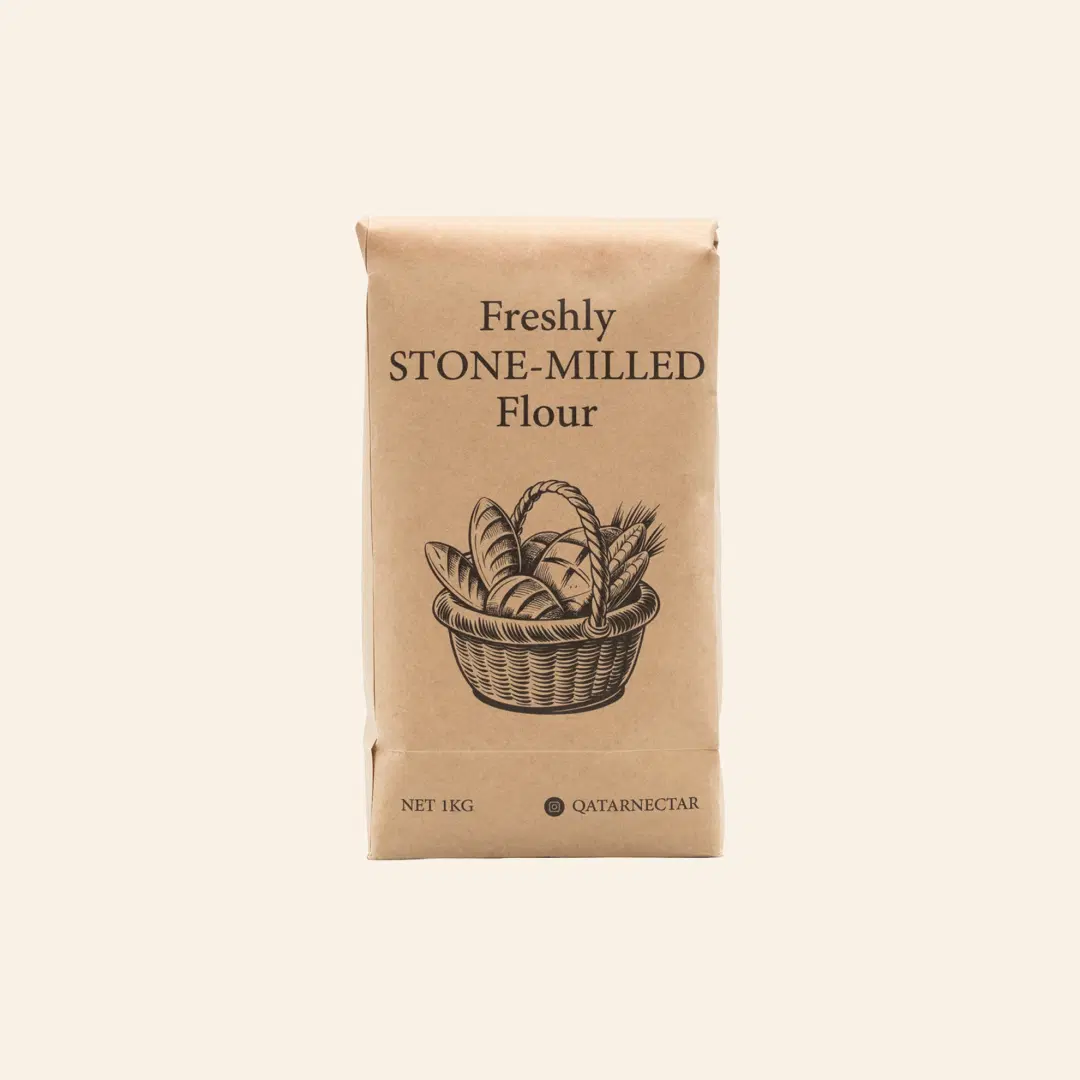

Stone-Milled Flour
In Stock
QAR 35.00
In Stock
- Dietary
- Gluten-free
1
Product overview
Commonly available store-bought flour has the bran and germ removed and is bleached and processed to increase shelf life, keeping only the largest part of the grain, which is the endosperm. Freshly milled whole wheat grains maintain 40 out of 44 essential nutrients needed for the human body. The bran is high in fiber, has a good amount of proteins, and enzymes that help with digestion. The germ is the smallest part of the kernel, but it contains the highest density of nutrients—mostly fatty acids and a lot of vitamin E. The endosperm is the largest part of the kernel, it’s primarily starch and serves as the food for the plant—this is the only part you get with commercial white flour. Compare that to stone-ground flour, which crushes the whole grain kernel—the bran, the germ, and the endosperm—releasing all of the nutritious vitamins, minerals, and oils into the flour. This is more complete and as nature designed it—a whole food.
Beyond better taste, the benefits of freshly milled flour include high fiber content, a great source of vitamin E, the B vitamin family, minerals, and a decrease in exposure to harmful chemicals used to process commercially made flours.
Storage information:
Unlike standard flours we’ve come accustomed to, freshly milled flour contains all the naturally occurring oils in the whole grains we mill. This means that the bran and germ are kept intact and not removed from the flour, like regular commercial white flour. This is where the robust taste and diverse nutritional profile live. Store your flour in the pantry, fridge or freezer.
With freshly milled grains you run the risk of your flour going rancid quicker as the naturally occurring oils from the germ are not removed. Storing your flour in the fridge or freezer slows down this process. Keeping it cool in your fridge or freezer will guarantee freshness and ultimate nutrition. With that being said, your flour is shelf-stable for up to 6 months. When storing in your fridge or freezer, it is highly recommended to put your flour into a plastic container or ziplock bag to help reduce the risk of your flour taking on the taste of whatever is inside your fridge.

Loading reviews...
Similar Products
View All